
What Is Employment?
Employment could be described as a relationship between two parties (businesses and/or individuals) in which one party performs service(s) (generally known as an employee), and the other party pays for the service(s) performed (generally known as an employer).
An employment relationship may or may not involve a written contract. However, employment which involves a written agreement is generally intended to be legally binding.
Employment also has different forms and classifications. For example, a permanent employee may be a direct representative of a company on an ongoing basis or an employee may be an independent contractor who performs work on a freelance basis. Temporary employees may also be directly hired for specific and usually pre-defined, short-term periods of time.
Types of Employment
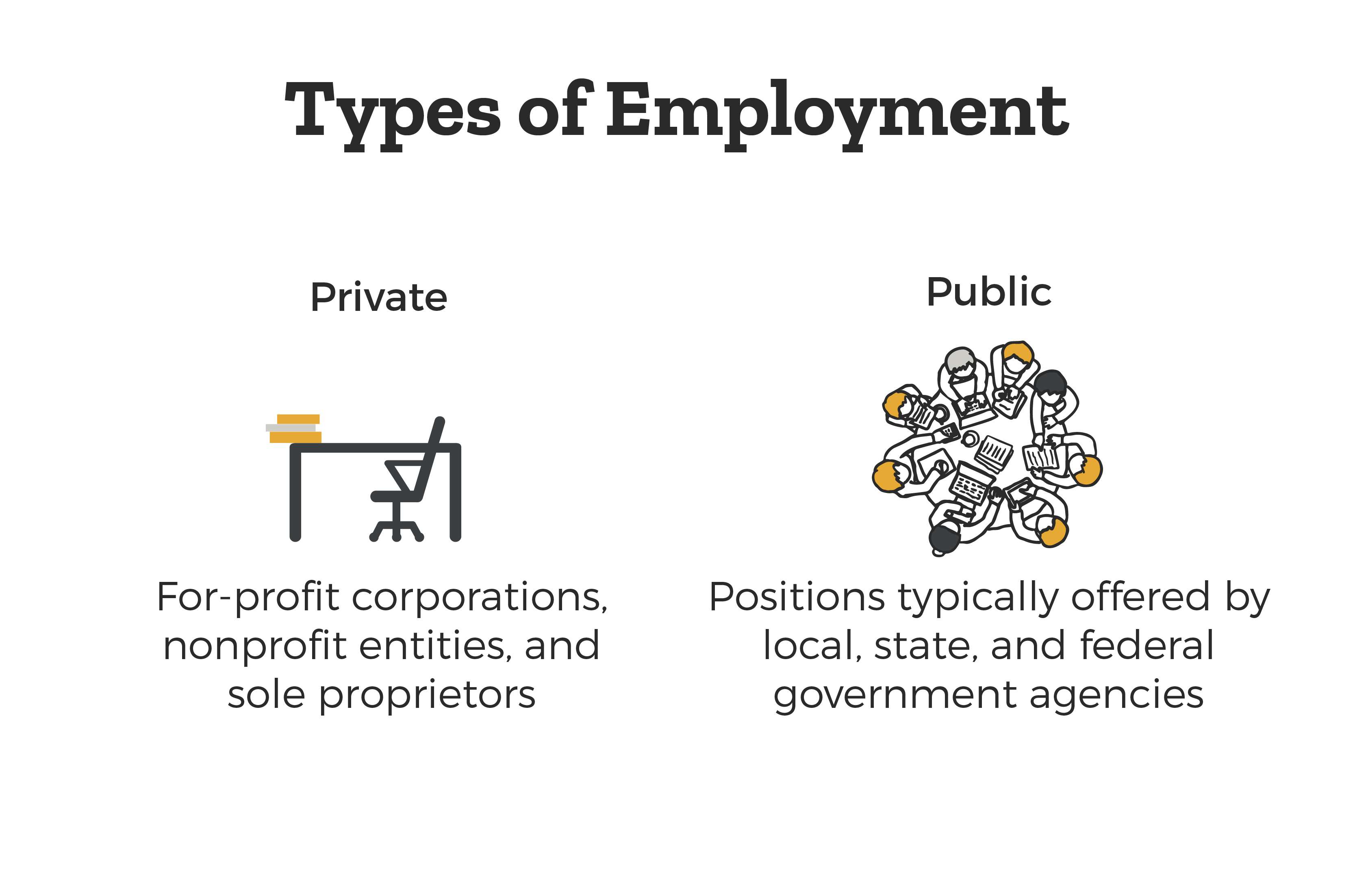
There are also different types of employers. The two main types of employers are:
- public sector employers
- private sector employers
Public sector employment generally means positions dedicated to serving the public. These positions are typically offered by local, state, and federal government agencies. The nature of public sector employment may be political or providing public services like police or firefighters. Because public sector employees are held accountable to the general public, these positions are often accompanied by additional policies and procedures.
Private sector employers are not government entities (however, they may perform services at the direction of the government). Thus, they are not held directly accountable to the public.
There are also different types of private sector employers:
- for-profit corporations
- nonprofit entities
- sole proprietors
Employment Laws
In the United States, all types of employment are governed by some form of employment law. This law has evolved to affect many employment-related topics ranging from child labor to employee safety.
Perhaps the most significant piece of legislation passed in the U.S. affecting employment is the Fair Labor Standards Act (FLSA). This law establishes uniform standards by which employers pay wages and overtime to public and private employees.
What Are Wages?
Monies paid to employees by employers for work performed are called wages. All types of wages may be taxed (tax deductions). Wages are separate and completely different from other forms of pay employers provide to workers, these are generally called benefits.
What Are Benefits?
Benefits may be financial, such as employer contributions into an employee’s retirement account. Benefits may also come to employees in forms other than money, like free child care or gym memberships.

What Is Minimum Wage?
Federal and state laws also set the lowest amounts for wages which employees must legally be paid. This is what is known as a minimum wage, and federally law currently requires that employers must pay workers at least $7.25 per hour.
What Is A Work Week?
In the United States, a full workweek is considered to last forty (40) hours. For a class of employees known as nonexempt, all work within any given week which is performed beyond forty hours is known as overtime.
What Is Overtime?
Overtime is required by law to be paid at the rate of 1.5 times the regular pay rate of the initial forty hours. The Family Medical Leave Act (FMLA) also requires that employees be provided unpaid time off from work in the event of certain situations, like pregnancy or a death in the family.
Employment Process
Interview
The employment process typically begins with a process called interviewing. During this process, employers typically meet with prospective employees and ask them a series of questions.
Employment law forbids employers from asking certain types of questions relating to a candidate’s personal information during the interview.
Generally, these questions should be related to the candidate’s ability to perform the job. These duties are usually presented to the candidate in writing before the candidate is selected to become an official employee.
Hiring and Labor Discrimination
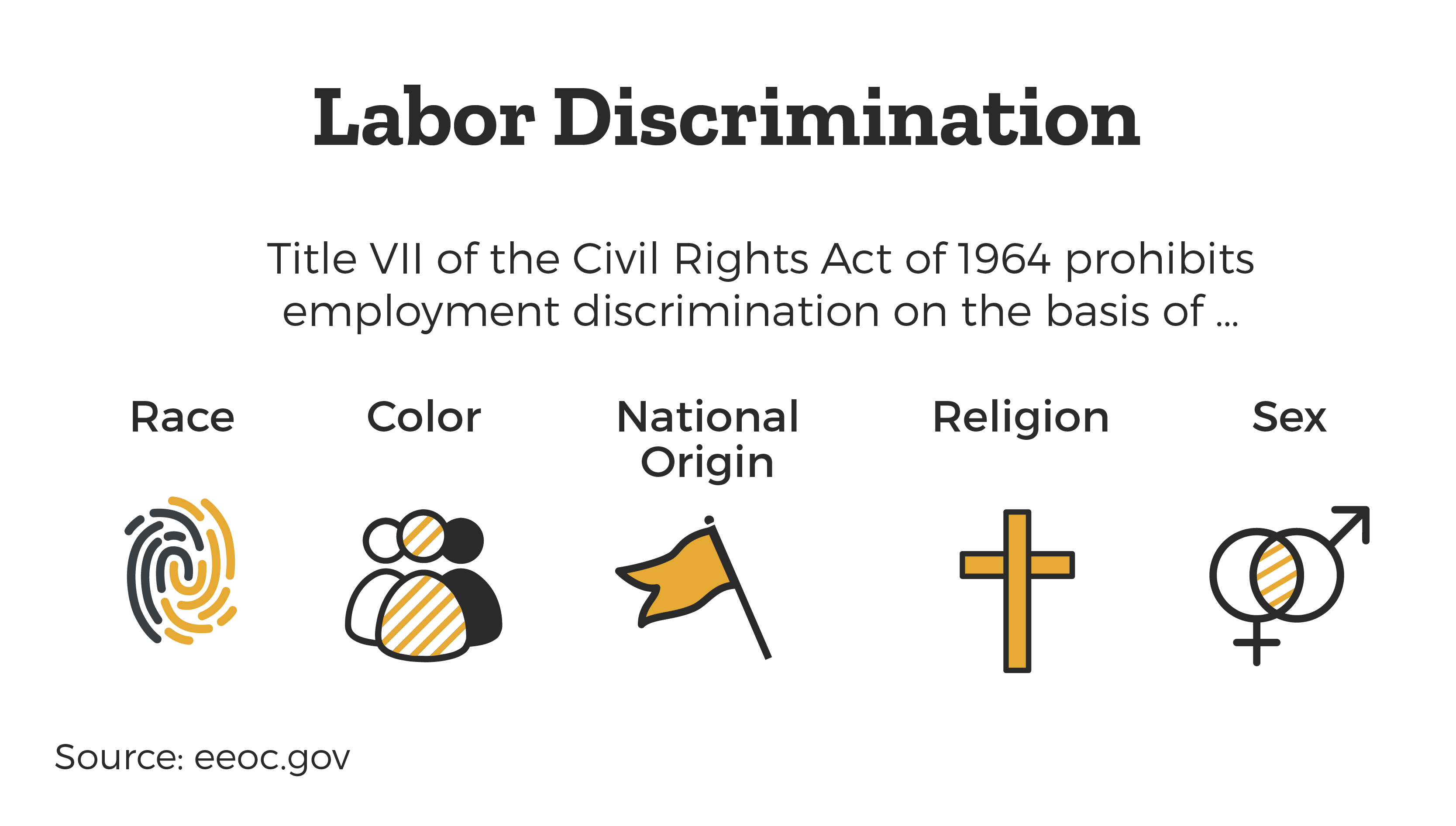
This selection is known as hiring. In the United States, federal law prohibits employers from considering factors such as:
- race
- religion
- gender
- sexual orientation
- age
What Are Labor Unions?
Employees are also allowed to form organizations with the express intent of collectively defending their rights as employees. These organizations are known as labor unions, and employers are also generally prohibited from discriminating against employees who belong to labor unions during the hiring process.
Employers and employees are legally permitted to establish the terms which will control employment before it begins. This is called an employment contract.
What Is An Employment Contract?
Employment contracts are most often put in writing, and they are to be signed by the employer and employee. An employment contract may define many aspects of the employment arrangement, such as:
- the length of the employment
- pay rate
- expectations of the employee’s job
Due to public policy, certain aspects of employment are only governed by employment law, and they may not be modified or waived by contract, such as:
- overtime pay
- policies that prohibit workplace harassment
What Is An Employee Contract Breach?
Any obligation written within an employment agreement that is not performed by any party is known as a breach and may be subject to certain penalties. These penalties may include financial payments, which the law calls damages.
Terminating Employment
The termination of an employment relationship is usually determined in one of two ways.
- If the employment involves a contract, the employer usually must have a specific legal reason (typically defined by the respective employment contract) for ending the employment. This is what is known as for-cause termination.
- An employment relationship which has no contract will allow the employer more discretion when making a determination to end an employment relationship.
What Is A Right To Work Law?
The majority of states in the U.S. have passed laws defining themselves as right-to-work states. This means the case of employment is not governed by an employment contract, and an employer may terminate an employee with or without a reason to do so.
These states have Right To Work laws:
- Alabama
- Arizona
- Arkansas
- Florida
- Georgia
- Idaho
- Indiana
- Iowa
- Kansas
- Kentucky
- Louisiana
- Michigan
- Mississippi
- Nebraska
- Nevada
- North Carolina
- North Dakota
- Oklahoma
- South Carolina
- South Dakota
- Tennessee
- Texas
- Utah
- Virginia
- West Virginia
- Wisconsin
- Wyoming

Sexual Harassment Employment Laws
Right-to-work terminations do have their limits, however. There are federal laws that strictly prohibit sexual harassment in the workplace.
What Is Sexual Harassment In The Work Place?
Sexual harassment could be described as any nonconsensual conduct of a sexual nature committed within a workplace or other professional setting. This conduct could include unwelcome sexual remarks to exploiting employees based on their willingness (or refusal) to perform sexual acts or favors.
Employers and employees who commit these types of acts may be subject to penalties under federal law.
Sexual Harassment Retaliation at Work
When an employer terminates an employee in response to a charge of sexual harassment, this is legally referred to as retaliation. This may expose an offending employer to even harsher penalties, as this type of misconduct is also prohibited by federal law.
There are several different state and federal government agencies tasked with enforcing these employment laws within their own specializations. At the national level, the United States Department of Labor (USDOL) is charged with the enforcement of all employment laws and regulations. Within the USDOL, there are several agencies which enforce specific laws.
For example, the Occupational Safety and Health Administration (OSHA) is tasked with ensuring compliance with safety standards and health of employees. Also, the Equal Employment Opportunity Commission (EEOC) is assigned to prevent workplace discrimination nationwide.
Workplace Injury Laws
Despite efforts to ensure workplace safety, injuries still often occur on job sites across the country. Lawsuits in response to these injuries became so numerous at one point that a “faultless” system was put in place at the state level by which employers could pay injured workers for losses without being held responsible in civil court.
What is Worker’s Compensation?
This system is nationally known as workers’ compensation. In these cases, the traditional civil trial court is replaced by an administrative hearing officer to ensure fairness in the compensation process.
What is Disability Compensation?
An employee who has been permanently injured may be required to be paid on an ongoing basis. This is simply known as disability compensation.

Employee Retirement Benefits
Employees have a variety of ways to prepare themselves financially for their later years when they are no longer able to work. This post-employment period is known as retirement.
What is a 401K Plan?
Employers often assist employees with retirement via investment-based savings accounts to which both the employee and employer contribute money. These accounts are called 401(k) plans.
Employees generally do not withdraw earnings from these accounts before retirement as early withdrawals are often accompanied by penalties. Employers also often offer other types of retirement incentives known as pensions.
What is a Pension?
Pensions differ from 401(k) plans in the sense that they tend to offer more defined payment plans. Workers who reach the age of sixty-six (66) may collect public benefits via the government benefit system known as social security. Active workers contribute to this system to support those who have retired from regular employment.